Their system
A national framework and four pillars produce speed, and this model is already being exported.
A national framework and four pillars produce Chinese speed
What we saw is organised around four pillars that reinforce each other and produce a measurable result: speed. They rest on a national framework that we do not have, and on an ecosystem of suppliers, schools and local specialists. This model is starting to be exported.
The national frameworkThe state sets the direction and helps, companies commit, the nation follows1 min
The state sets the direction and helps, companies commit, the nation follows
The four pillars rest on a framework that works in three stages.
Chinese companies thus move forward in a marked-out corridor that lets them invest fast and for the long term. The delegation saw a continuous cycle: ambition, investment, execution, learning, then new ambition.
In detail
Companies also present themselves as committed to a national project: BYD wants to help lower the planet's temperature by one degree, XPENG welcomes schools into its factories. When everyone moves in the same direction, decisions are faster and the effort lasts. A Western manufacturer has to make up alone for what this framework provides, or get it from its industry.
The system has a downside: in 2025, Beijing launched a campaign against "involutionary competition"19, after price wars in the car industry18 and solar.
Pillar 1: ProcessChinese plants master their process, from machine to supplier2 min
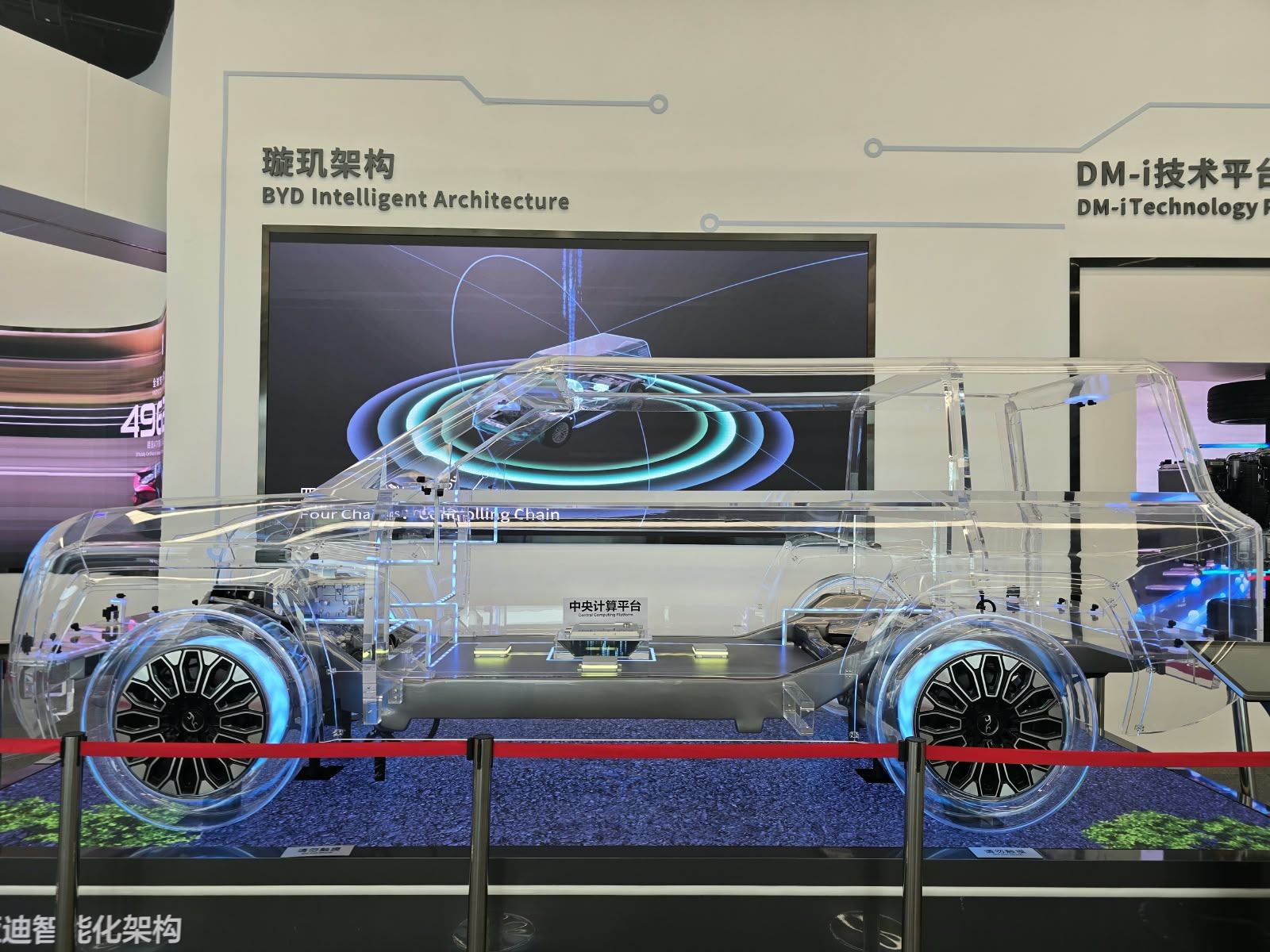
They build their machines, and train and equip their suppliers
The companies we visited design their critical machines and keep the hardest components in-house: 75% of critical machines at Honor, everything except tyres and windscreens at BYD, chips and cameras at XPENG. The details are on the pages for Honor, BYD and XPENG.
In detail
In a car, the most complex part used to be the combustion engine. Today it is the battery. The Chinese learned to master it on small electronic devices before moving on to vehicles. Meanwhile, Stellantis had to halt several French plants in October 2026 because ACC could not deliver batteries20.
Shein applies the same principle to its suppliers: no single supplier could pay off the tools it provides them (see the Shein page).
By outsourcing, Europe lost part of its know-how
These companies master their process in house, down to machine design. Our groups often settle for partial integration and work with poorly integrated suppliers. The delegation sees the Chinese approach to supplier improvement as both intrusive and collaborative: an annual audit of every supplier, an improvement programme, and ten years of technical and data integration.
In detail
For the West, the consequence is direct. By outsourcing circuit boards, it lost its know-how. By delegating manufacturing, the client loses the knowledge the subcontractor builds up, and the local ecosystem that let it react disappears. The search for short-term profitability has often taken priority over this mastery. When a supply chain breaks, this dependence becomes a risk.
- List the machines or components over which the company has lost control.
- Bring inspection machines in house first, because that is where the feedback loop plays out.
- Equip a few key suppliers, as well as auditing them.
The obstacles are well known: the cost of transformation, the availability of skills and the maturity of the local ecosystem. Pragmatism must therefore remain the rule, as it is for our hosts: people stay where the technology is not ready or not profitable, from functional testing at Honor to assembly at AION and XPENG.
Pillar 2: LeanAt Huawei and BYD, operators drive lean2 min
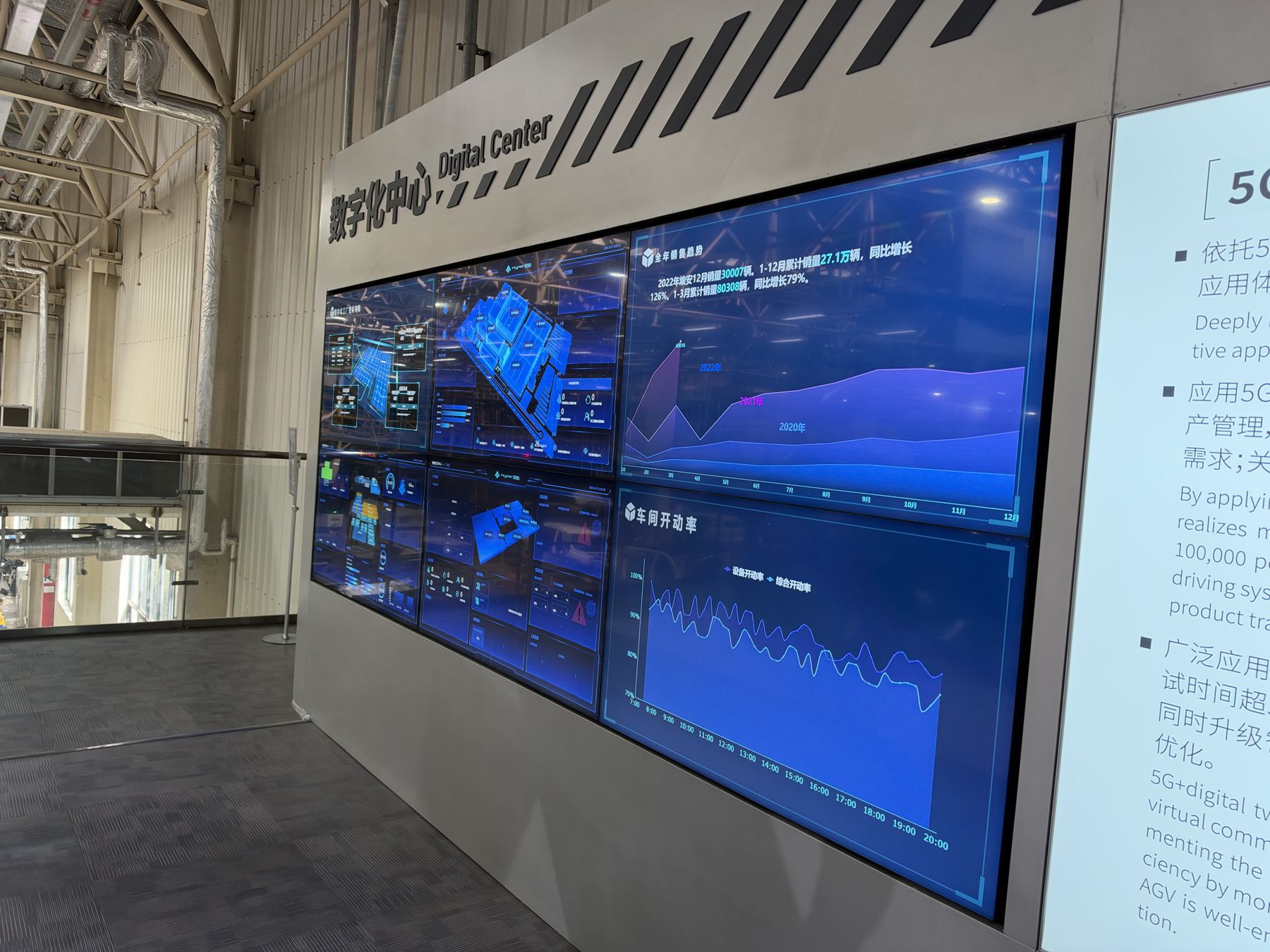
“They just do it, they no longer ask themselves questions.”
The delegation
The shop floor improves, and every gain is rewarded
At Honor, lean relies on the quality teams and on operators who are trained very regularly. 5S extends to the machines, from the keyboard to the label.
In detail
At Huawei, every productivity or cost gain has been rewarded since the plant opened in 2012. At BYD, operators propose improvements to standards, and half of the time saved goes to training. Shein trains its suppliers in five centres, with certification for each workstation.
What the delegation takes away: discipline and speed of decision
Several practices surprised the delegation: continuous training, even during breaks; rewards for successful projects, in salary or shares; gamified competition between teams. Add to that a culture of standards and certification, and disciplined execution. An idea mentioned on a Friday started the following Monday. Everyone noted the visual management and a mindset that accepts failing fast, as long as there is a lesson.
In detail
Asked about the difficulty of scaling up, an XPENG manager replied that it had never been a bottleneck, because everyone wants to win. Context matters: a stock market listing is expected in the coming months, and almost every employee has a stake in it. Value sharing matters: teams see a new tool as a way to win.
The regulatory and cultural environment is different in Europe. Some mechanisms, whether gamified, based on value sharing or on discipline in rolling out lean, are still easy to adapt and can change the mindset. For example:
- a team improvement contest, with a clear financial reward;
- half of productivity gains reinvested in team training;
- certification by workstation;
- 5S that extends to the machines.
One question raised by the delegation still needs an answer before any launch: what do people do when you automate?
Pillar 3: R&DHuawei and BYD fund R&D before dividends1 min

“Research must come before the dividend.”
The delegation
R&D can reach a quarter of revenue
Huawei spends nearly 25% of its revenue on R&D, or $27 billionD. 114,000 employees, half the workforce, work in it, and the company claims 165,000 patents22. Research there is fundamental first, then applied with pragmatism. Huawei says it learned from companies such as IBM, starting as their subcontractor, then adapting their methods.
In detail
BYD raised its R&D spending to about €8.5bn in 2025, up 17%23. At SCUT, a third of the university's funding comes from companies (see the SCUT page).
The resource gap worries the delegation
XPENG, whose core business is cars, presented its plan to mass-produce flying cars and humanoid robots by the end of 2026. Many participants were struck by the pace of innovation of the companies visited. They wonder whether their own companies could mobilise such financial resources.
Dividends are a board decision. At their level, a COO can set aside a line for experimentation in their plants' budget, run a project each year with an engineering school or a laboratory, and measure the time between a concept and its start of production. Several members of the delegation also want to argue before their board for R&D funded before dividends, and for patient capital that invests over a much longer horizon than the quarter or the year.
Pillar 4: DataXPENG prepared its data before adding AI2 min
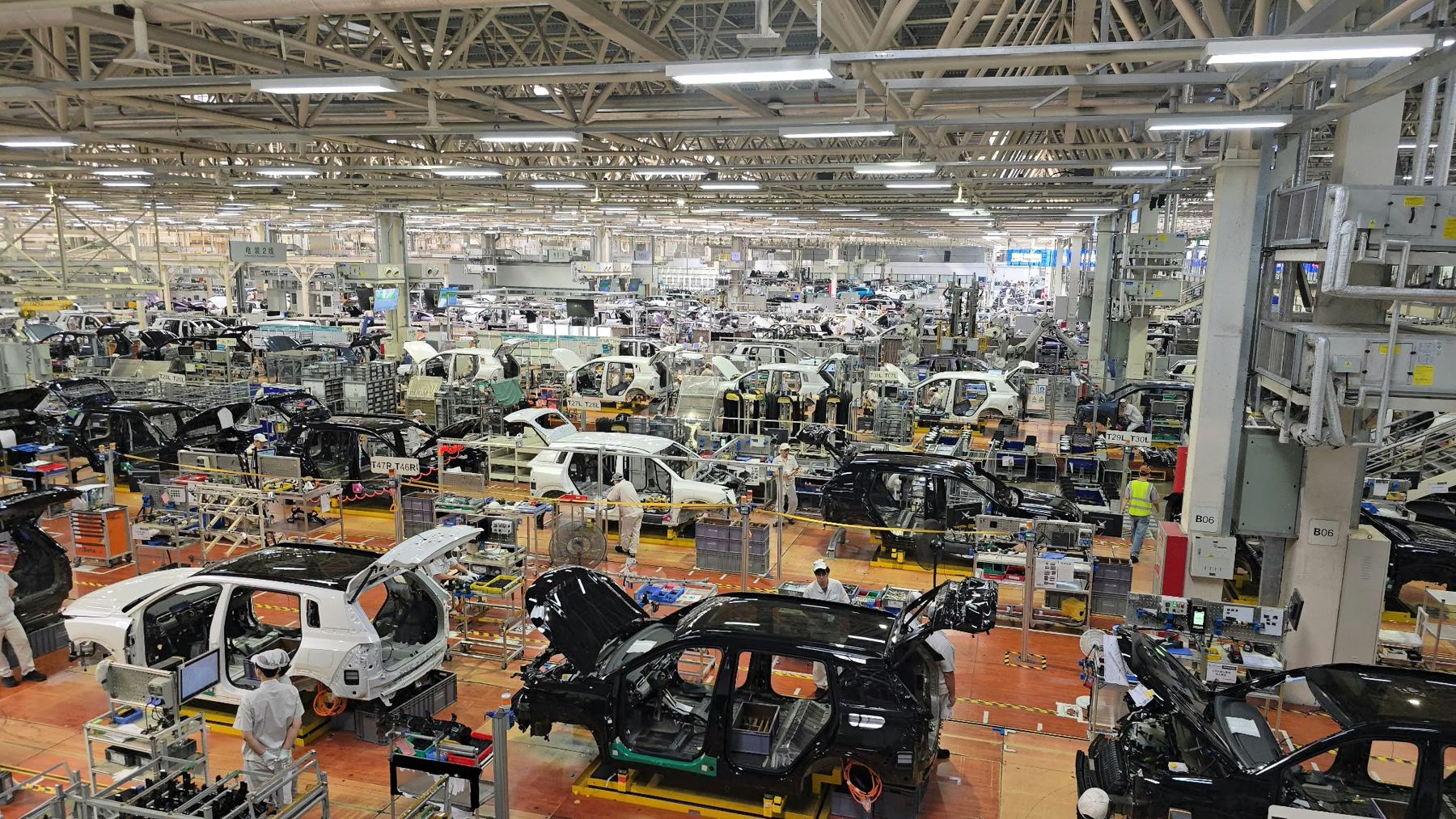
AI works on the line, deployed by operators
Most of the companies we met, such as XPENG, BYD or Shein, define themselves first as technology companies, before being industrial ones.
In detail
XPENG followed a precise order: first improve the process with people, then capture clean, structured data, and only then add AI. The no-code platform described on the XPENG page is the culmination. Each application handles a simple case, such as whether a part is present or correctly fitted, a count or a reference, in a closed loop with the process. The goal is for operators to improve their own workstations with AI.
Manufacturing data is cleaned, versioned and governed for AI, all the way to the digital twin. XPENG's roadmap runs from cameras in 2025 to autonomous decision-making between 2028 and 203027.
At Vipshop, the planning system described on the Vipshop page ships around 80% of orders on the promised date. The promised delivery time is 48 hours, whatever the destination. AI agents are being trialled28, based on the data already collected.
Speed of testing matters more than AI
For the delegation, XPENG has covered 80% of the way to AI-driven production, and its speed of execution matters more than the AI itself. Its takeaway: a structured, governed data platform is a prerequisite for AI.
In Europe, AI has stayed in the offices
In Europe, AI is settling into offices first. In 2025, 20% of EU companies with ten or more employees used it, mainly to analyse text29. In France, the Banque de France finds that more than two thirds of companies with twenty or more employees use generative AI, mostly in support functions, with productivity gains still limited30.
In detail
In China, AI went to work on the line first. Technology is no longer a constraint: the same models, the same tools and the same cloud are available in Shenzhen, Paris or Detroit, a few weeks apart. When everyone can buy the same technology, the gap is made upstream of the model, in preparing the data.
We found no reliable statistics on the state of production data in European plants. The experience of OSS Ventures, which has visited more than 1,000 production sites, suggests it is generally very poor. We recommend that every CEO measure their own.
Speed and exportSpeed, and a model that travels2 min
The gap is measured in months of development and days of deployment
The gap shows in development, deployment and decision-making. BYD reports one vehicle every 52 seconds.
In detail
At XPENG, a technology that appeared about six months ago is already running in production. Roland Berger links this speed to parallel hardware and software development, early supplier integration and shorter decision paths31.
Chinese groups are setting up in Europe
XPENG plans to replicate abroad, between 2026 and 2030, the factories proven in China: simulated on a digital twin before being built, then operated remotely.
These groups arrive in Europe with their plants, their software and their suppliers.
Real limits: appearance inspection, little demonstrated AI
Some members of the delegation doubt that these plants perform much better in production than European ones. All of them see them as more advanced, very transparent, and above all faster.
In detail
Complex appearance and colour inspection often remains human, even at the best, and brand, heritage and finish remain our strengths. At Shein and Vipshop, the talk about AI stayed general, with no demonstration. These limits are shifting fast: if Huawei keeps nine people on a line, it is a profitability calculation, and that calculation changes with the cost of robots.
Nothing we saw guarantees they will stay as they are.
Margins and exportsChinese cars are arriving in Europe1 min
In 2025, Chinese car exports rose by 30%, and the share of Chinese brands in Europe doubled in a year. BYD stays profitable while cutting its prices.
BYD's net margin, 4% in 2025, is close to its direct subsidies, which the Kiel Institute estimates at 3.5% of its revenue in 2022 (seeAppendix E). The two figures cover different years. The margin gap with Volkswagen therefore owes a good deal to state support. What is worth copying lies in design choices, speed of decision and supplier integration.
2025: a price war that weighs on suppliers
- Prices pushed below break-even
- Suppliers paid late
- Dependence on state support
- Design choices (60% of the cost gap)
- Short decision paths
- Suppliers involved early
BYD's net margin is calculated as ¥32.6bn of profit on ¥804bn of revenue. Volkswagen: €6.9bn on €321.9bn. Both are net margins.
Sources
15. 15th five-year plan, adopted on 12 March 2026: Caixin, 5 March 2026; Implicator, citing Reuters.
17. CarNewsChina, 8 June 2026, citing CCTV.
18. Associated Press, 3 July 2025: BYD price cuts on more than 20 models in May 2025, followed by its competitors.
19. Bloomberg, via The Star, 14 July 2025.
20. Stellantis, announcement of 29 September 2026, reported by ABC Bourse.
22. Internal Huawei presentation, not public: 2026 forecast.
23. CnEVPost, 27 March 2026, based on BYD's results.
24. National Bureau of Statistics of China, R&D spending 2025.
25. SIES, Note flash no. 16, July 2026.
26. Eurostat, R&D spending 2024, December 2025.
27. Information presented by XPENG during the visit.
28. Visit to Vipshop, Guangzhou, 29 October 2026.
29. Eurostat, use of AI in enterprises, 2025.
30. Banque de France, bulletin no. 266, September 2026.
31. Roland Berger, China Speed, March 2026.
32. Reuters, 9 June 2026, via EVwire; IAA Mobility, January 2026; S&P Global Mobility, May 2026 ; L'Automobiliste, 20 May 2026.
50. BYD, 2025 results, via CnEVPost ; Volkswagen, 2025 annual report ; Stellantis, 2025 results.
51. CAAM, based on Chinese customs data, via Gasgoo.
52. Dataforce, July 2026, via New Mobility.
53. AP, July 2025 ; Bloomberg, July 2025.
D. Figure presented by the company during the visit: full status on the status of figures page.